BEFORE THE GOVERNOR
A Wedding Remembered Through the Lens
THE WEDDING OF WES & DAWN MOORE | JULY 6, 2007
SOME WEDDINGS NEVER REALLY LEAVE YOU
There are weddings you photograph, deliver, and eventually file away in the archives. And then there are weddings that remain with you. Not necessarily because of who the couple becomes or where life eventually takes them, but because of something you experienced while standing behind the camera.
For me, the July 2007 wedding of Wes and Dawn Moore was one of those occasions. Long before Wes became governor of Maryland, I knew him simply as a groom preparing to marry the woman he loved. Nearly twenty years later, I can still remember the feeling of that day: the sunshine, the slight breeze, the anticipation, and the hundreds of bubbles waiting to fill the air.
I also remember three cameras hanging from my shoulders as I prepared for what I hoped would be an extraordinary photograph. But I’m getting ahead of myself. Our story began well before those church doors opened.
BEFORE THE GOVERNOR, THERE WAS A BRIDE AND GROOM
Dawn first discovered Artisan Photographics at a bridal show. Later, she and Wes came to our home to discuss their wedding photography. My wife, Carla, liked them both, and I remember Wes as intelligent, engaging, and someone with a wonderful sense of humor. He had served in the Army and was working on a book that would eventually become The Other Wes Moore.
But none of that was particularly important to me as their wedding photographer. I wasn’t photographing a future governor. I was photographing a couple preparing for one of the most meaningful days of their lives. That was my responsibility, and it was one I took seriously
LONG BEFORE THE FIRST SHUTTER CLICK
Wedding photography begins long before the ceremony. On the morning of July 6, I remember arriving at the Mandarin Oriental in Washington, DC, where Dawn was getting ready. It was early, perhaps around eight or nine o’clock. I spent approximately an hour photographing those preparations before heading to National City Christian Church.
Working alone meant that every piece of equipment was my responsibility. I had a cart to transport my gear: cameras, lenses, lighting equipment, stands, cables, and the little things you learn never to leave behind. Older buildings could present their own challenges. Sometimes the electrical outlets weren’t compatible with the grounded lighting equipment we carried. Years of experience taught me to anticipate those practical difficulties before they became problems.
Once I entered a church, I would begin studying the space. Where was the available light? Where could I position my equipment? How would I create enough illumination while preserving the natural atmosphere of the ceremony? I generally preferred lighting that produced contrast and dimension rather than photographs that appeared completely flat or overly diffused. There was a particular look I wanted, and getting that look required preparation.
Setting up front lighting, backlighting, and cross-lighting could take thirty minutes or more. I would walk between the lights, test their output, evaluate the exposures, and make adjustments, all while watching the clock. Because weddings have one characteristic that photographers understand very well: they don’t wait for you. The ceremony begins, the couple moves, and the guests react. Whether you’re ready or not, the moments happen.
THREE CAMERAS AND ONE OPPORTUNITY
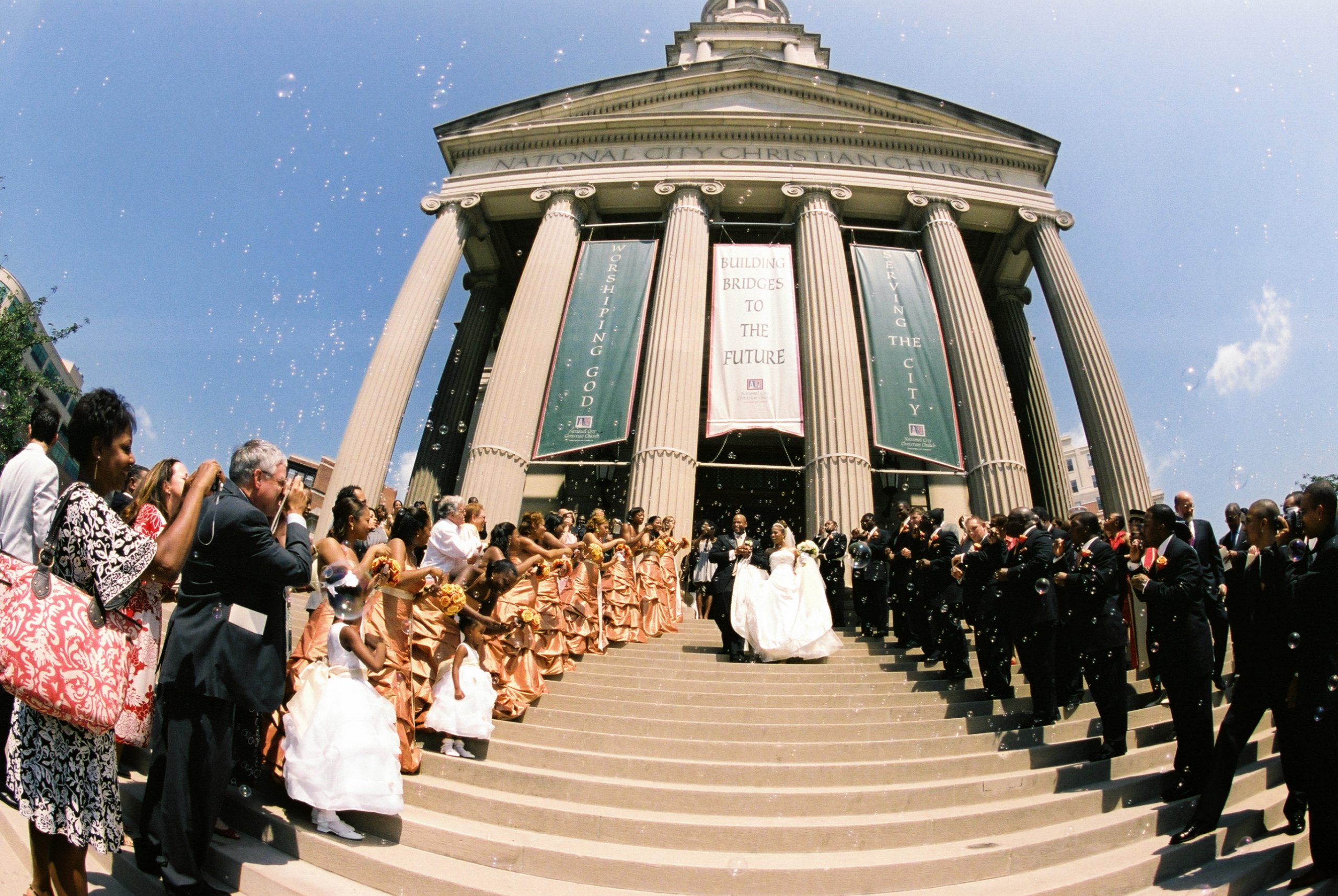
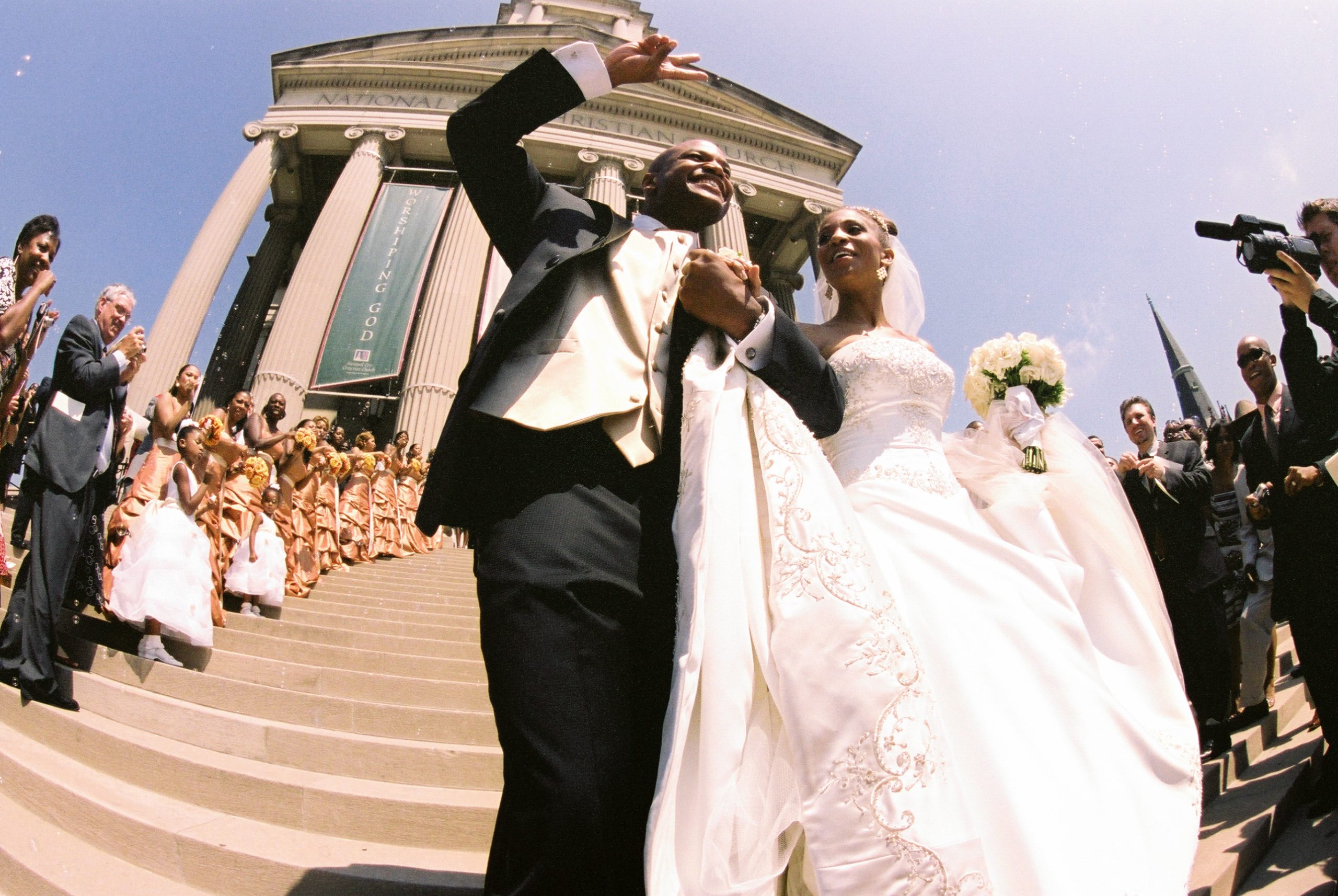
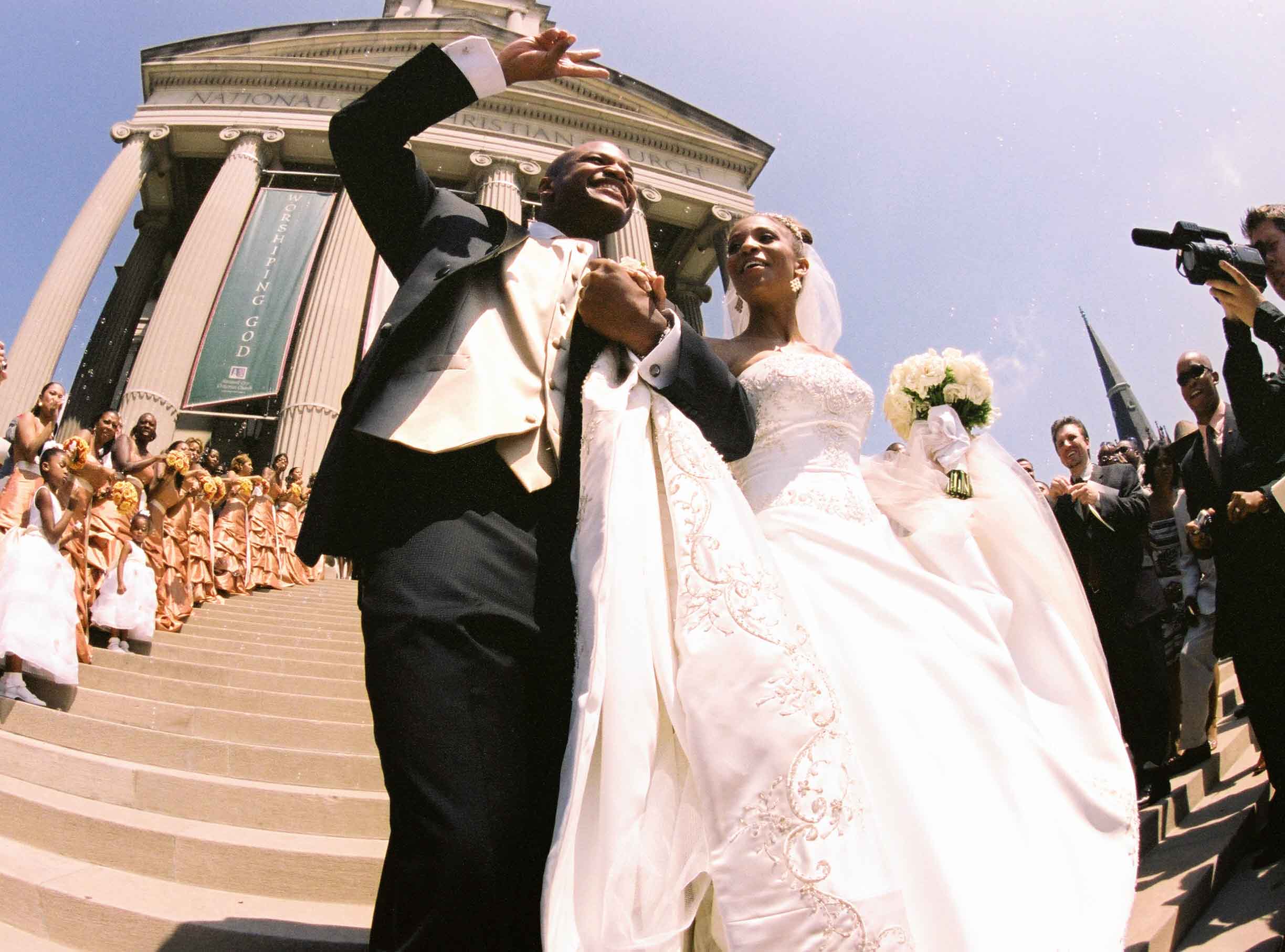
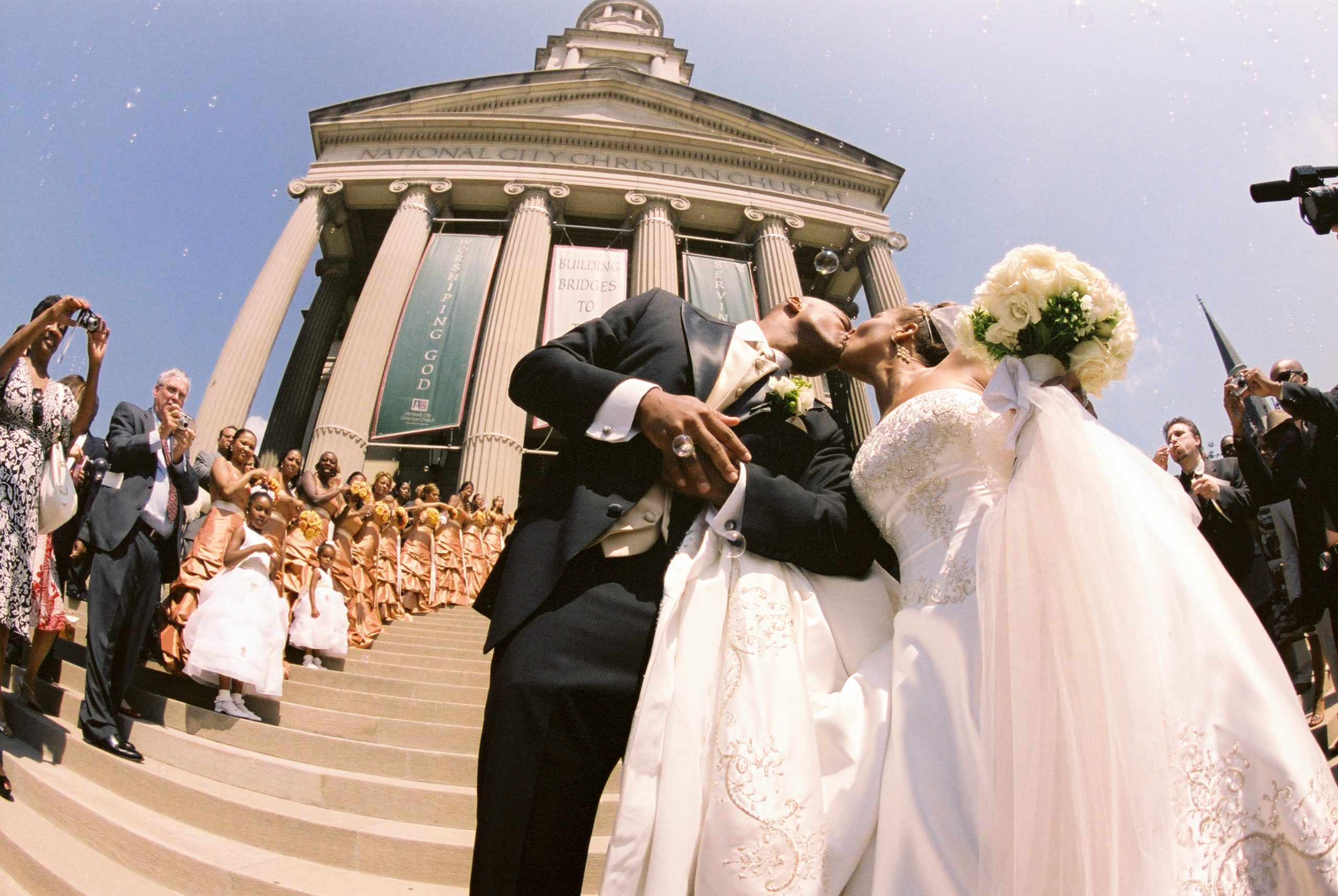
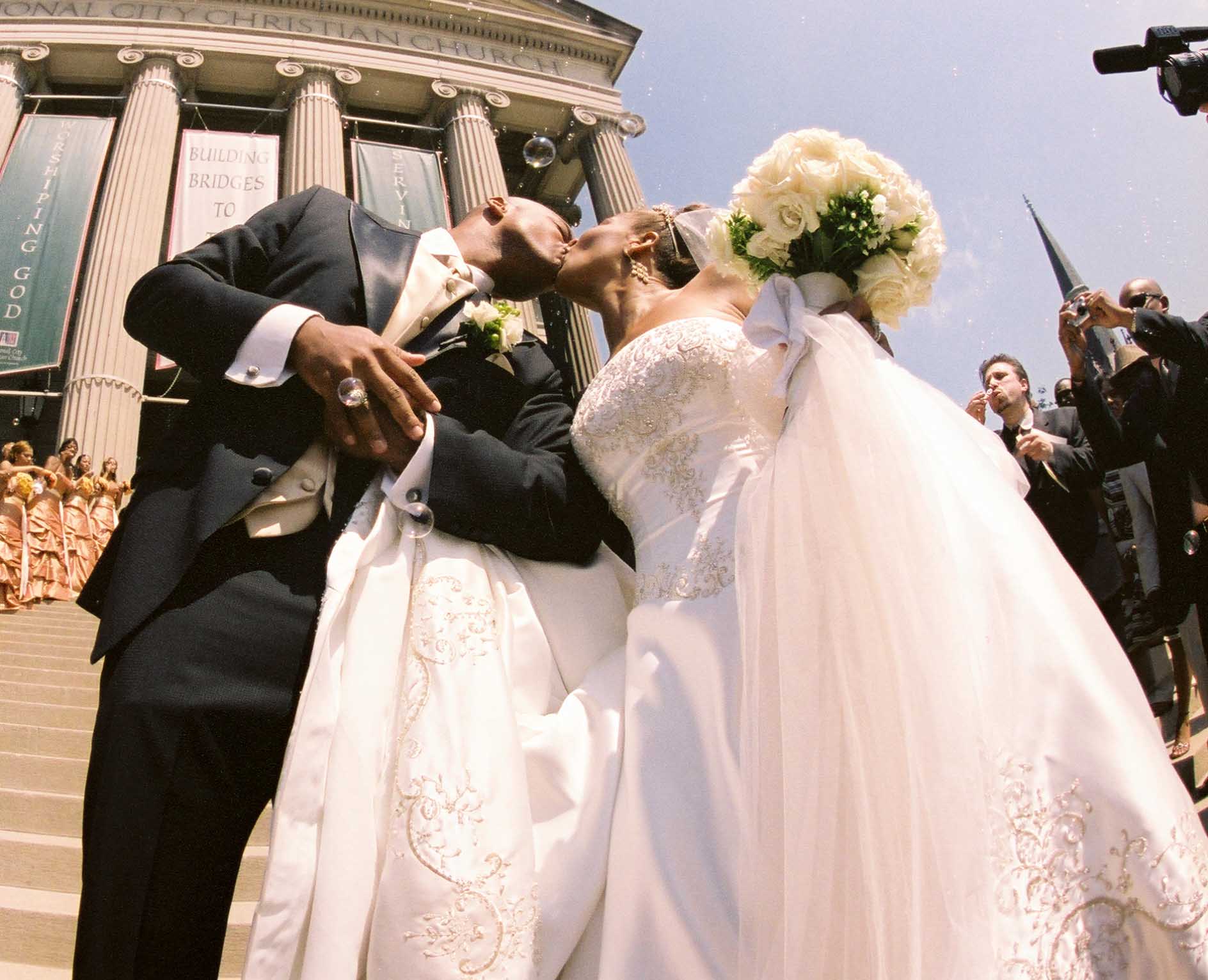
By the time the ceremony ended, I was preparing for one of the moments I’d been anticipating: the wedding exit. National City Christian Church has a magnificent entrance, with imposing columns and a long staircase leading toward the street. More than fifty steps, as I remember it. The wedding party and guests began taking their positions along the staircase, waiting for Wes and Dawn to emerge. They were ready with bubbles, hundreds of them.
It was a beautiful July afternoon. The sun was shining, and a slight breeze moved through the air. You could feel the excitement building, and I certainly could.
I was carrying three cameras that day. One was equipped with a fisheye lens, another with a 70–210mm telephoto, and the third with my dependable 24–120mm zoom. Each had its purpose. The telephoto gave me reach, the standard zoom offered versatility, but looking at that enormous staircase, the architecture, and the guests lining both sides, I knew the fisheye could give me something special.
I wanted the entire scene: the church, the steps, the people, the bubbles, and, of course, the newlyweds. I also knew I couldn’t simply keep backing away as the couple approached. There were people behind me, and I couldn’t be certain where everyone was standing. I needed to make my decisions quickly.
Then the moment arrived.
WHEN EVERYTHING CAME TOGETHER
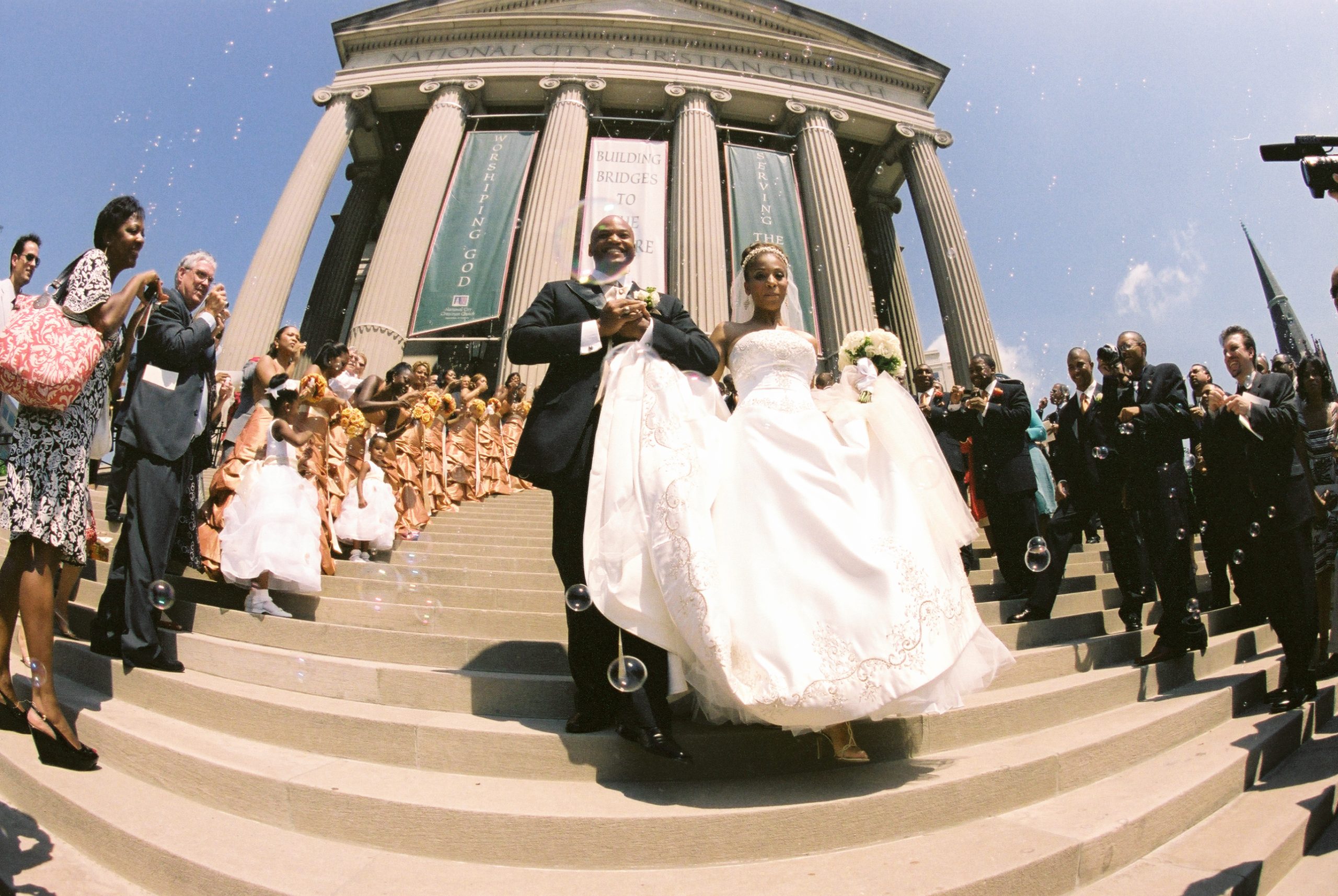
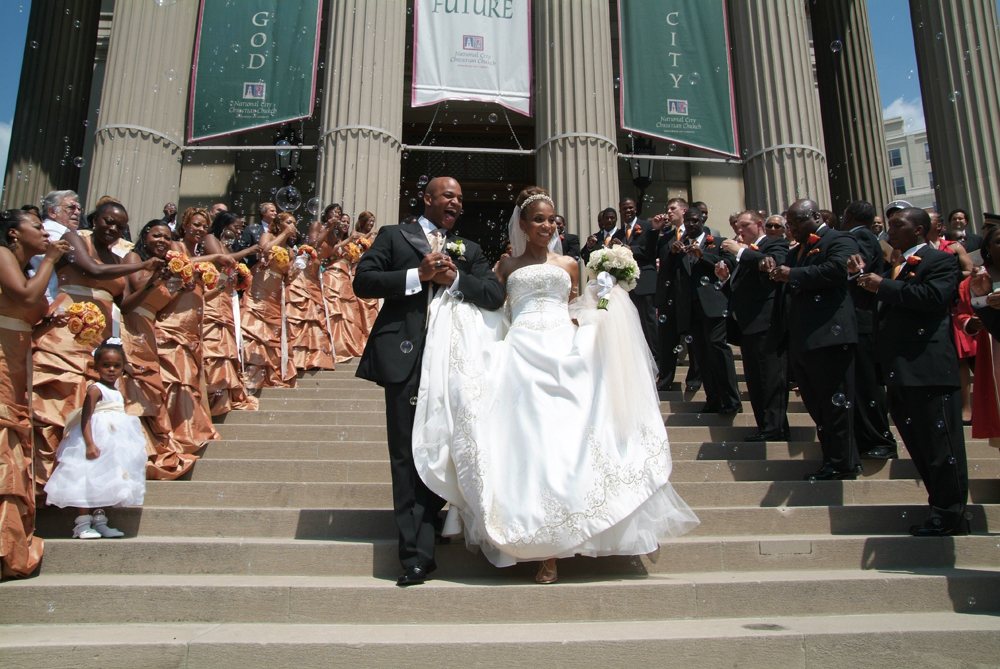
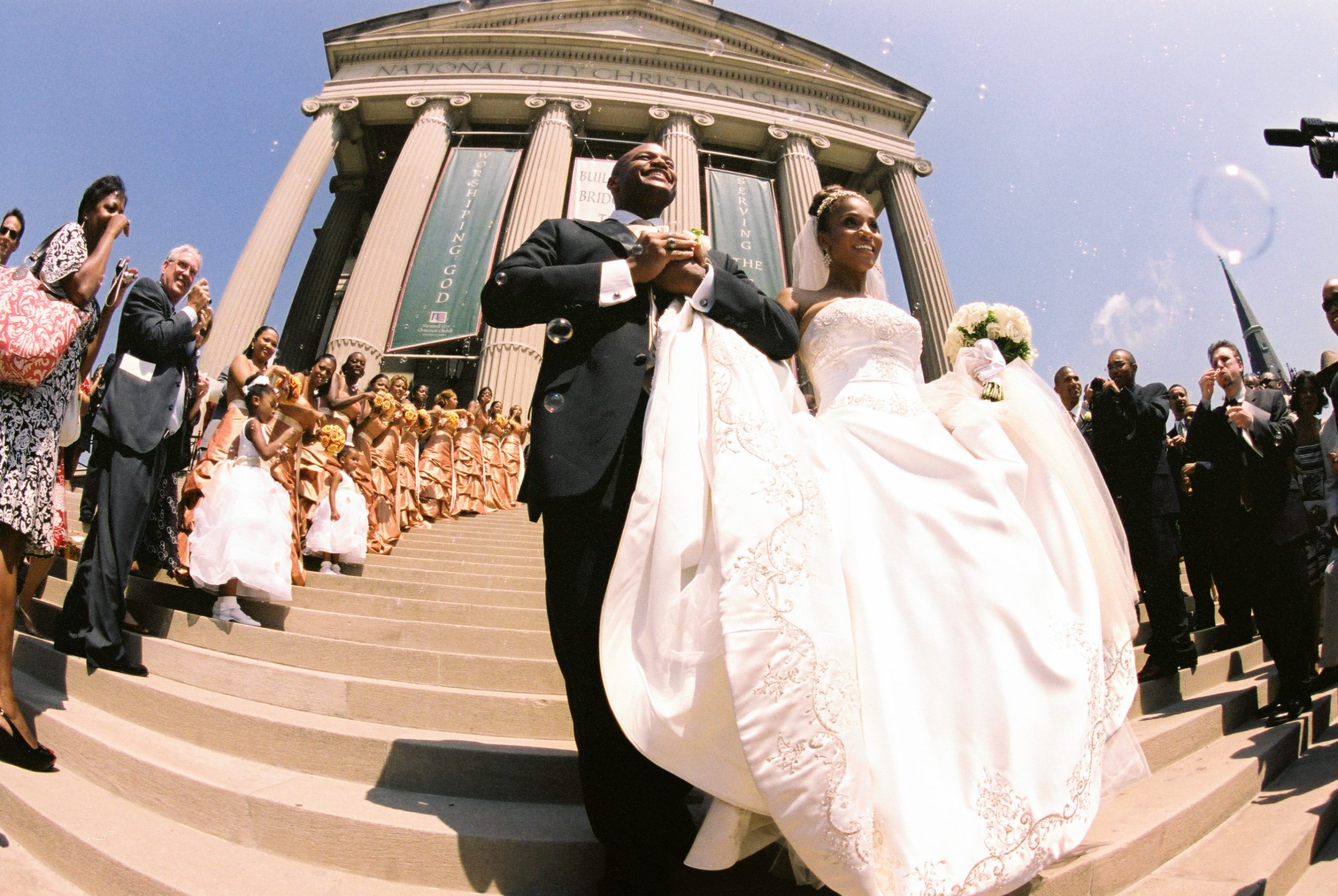
Wes and Dawn began descending the staircase, and suddenly the scene came alive. Bubbles filled the air, the wedding party cheered, and smiles appeared everywhere. The couple moved toward me against the magnificent backdrop of the church. It was incredible, almost like watching a movie unfold.
I was working fast. There was no time to stop and examine the photographs on the back of the camera, no time to second-guess every exposure, and no opportunity to ask everyone to return to the top of the stairs and do it again. I had to trust what I knew.
My hands moved between cameras, my eyes followed the couple, and my mind anticipated where they would be a second later. Something happened that experienced photographers will understand. The technical decisions stopped feeling like separate decisions. The mind and body began working together, almost like breathing or walking. You don’t consciously think about every movement. You simply respond. You feel the moment, anticipate what is coming, and press the shutter.
The lines of the staircase seemed to converge toward the couple as they approached. The bubbles added movement and texture, and the architecture gave the scene its scale. In the middle of everything were two people celebrating their marriage.
I knew it had the potential to be dramatic, but I wouldn’t know what I had truly captured until later.
THE PHOTOGRAPHS I HAD HOPED FOR
When I finally sat down to review the images, I began seeing the wedding exit again. Only this time, the moments weren’t rushing past me. They were frozen. The imposing church, the wedding party lining the steps, the bubbles suspended in the air, the couple moving closer, their smiles, and their kiss. Frame after frame, the scene unfolded almost like a motion picture.
I felt something every photographer hopes to experience: satisfaction. Not simply because the exposures were right or the compositions were pleasing, but because the photographs reflected what I had felt while making them. The excitement, the anticipation, and the extraordinary atmosphere of that afternoon had somehow found their way into the images.
I was proud of those photographs. Very proud. And I still am.
FROM GRAND ARCHITECTURE TO INTIMATE MOMENTS
The celebration didn’t end at the church. We also photographed formal portraits with the United States Capitol providing a magnificent Washington backdrop. Formal wedding photography presents its own challenges. There’s a schedule to maintain, lighting to manage, and a wedding party full of people who need to be organized. You’re thinking about exposure, composition, expressions, and the clock, all while trying to keep everyone comfortable. Sometimes you’re sweating through every minute of it.
But the goal never changes. You want photographs that the couple will be proud to look at years later.
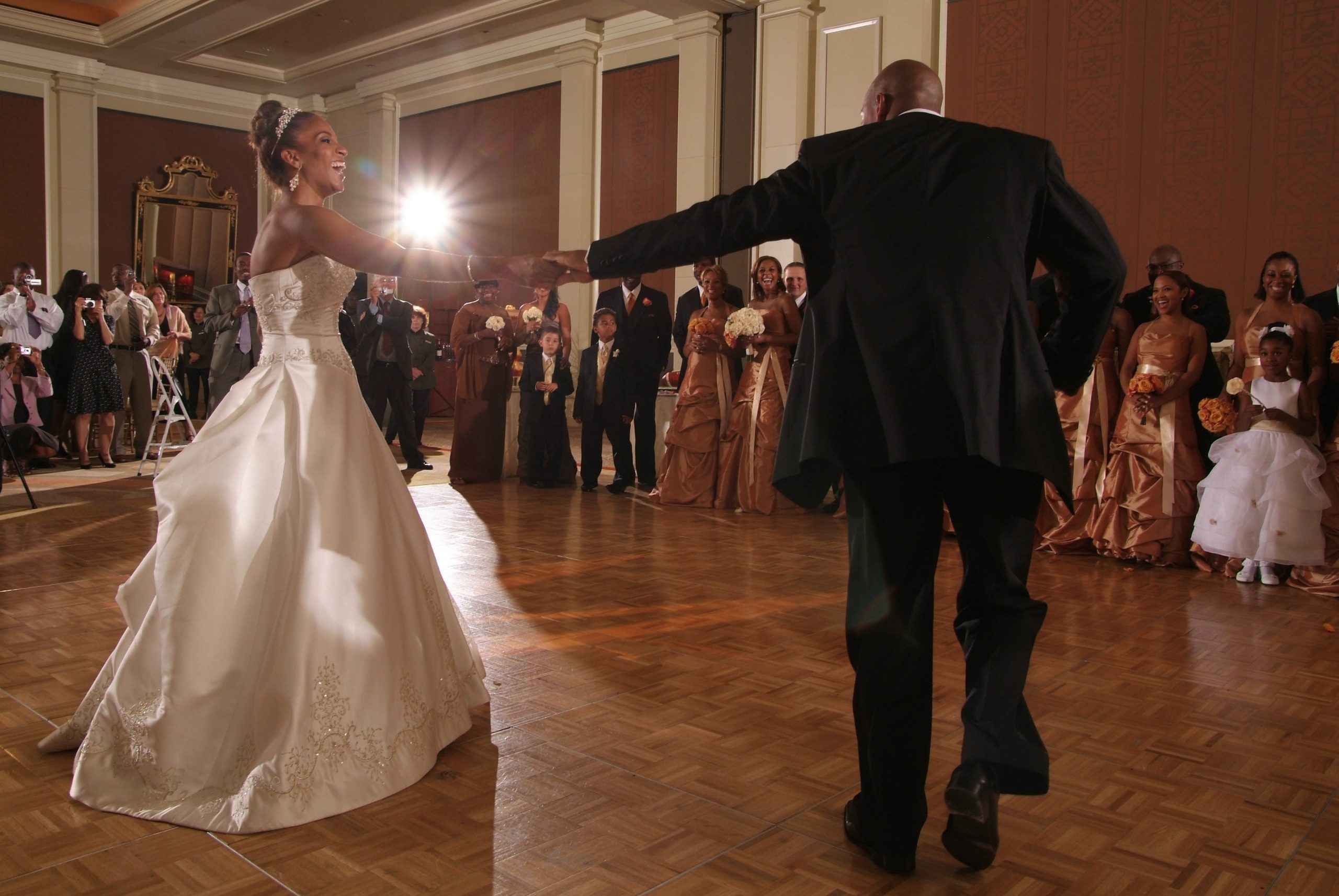
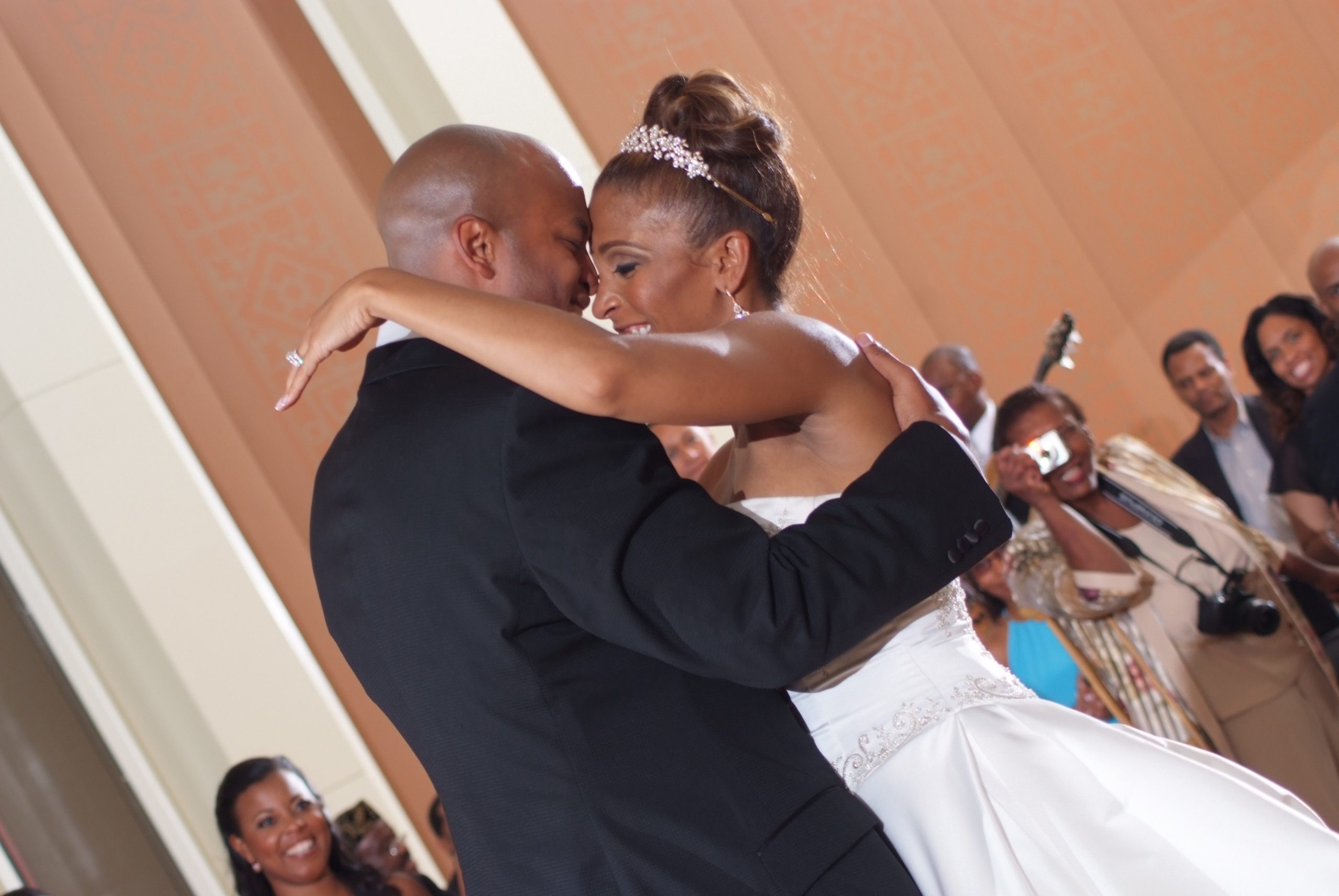
Afterward, the celebration continued at the Mandarin Oriental. I remember the feeling of that grand reception room: the elegance of the surroundings, the wedding party, the dancing, the laughter, and the personal moments that happen when family and friends gather to celebrate two people they love.
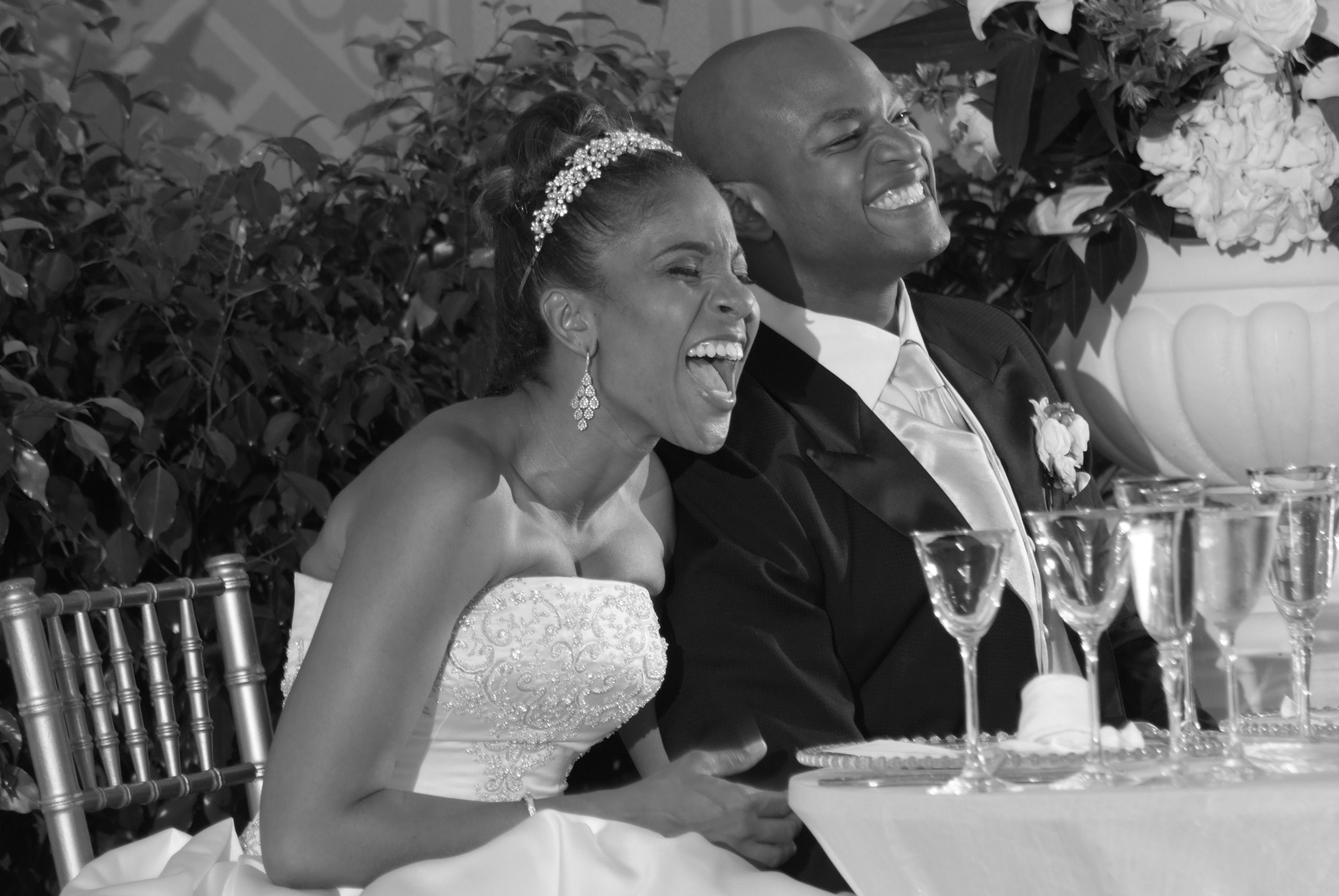
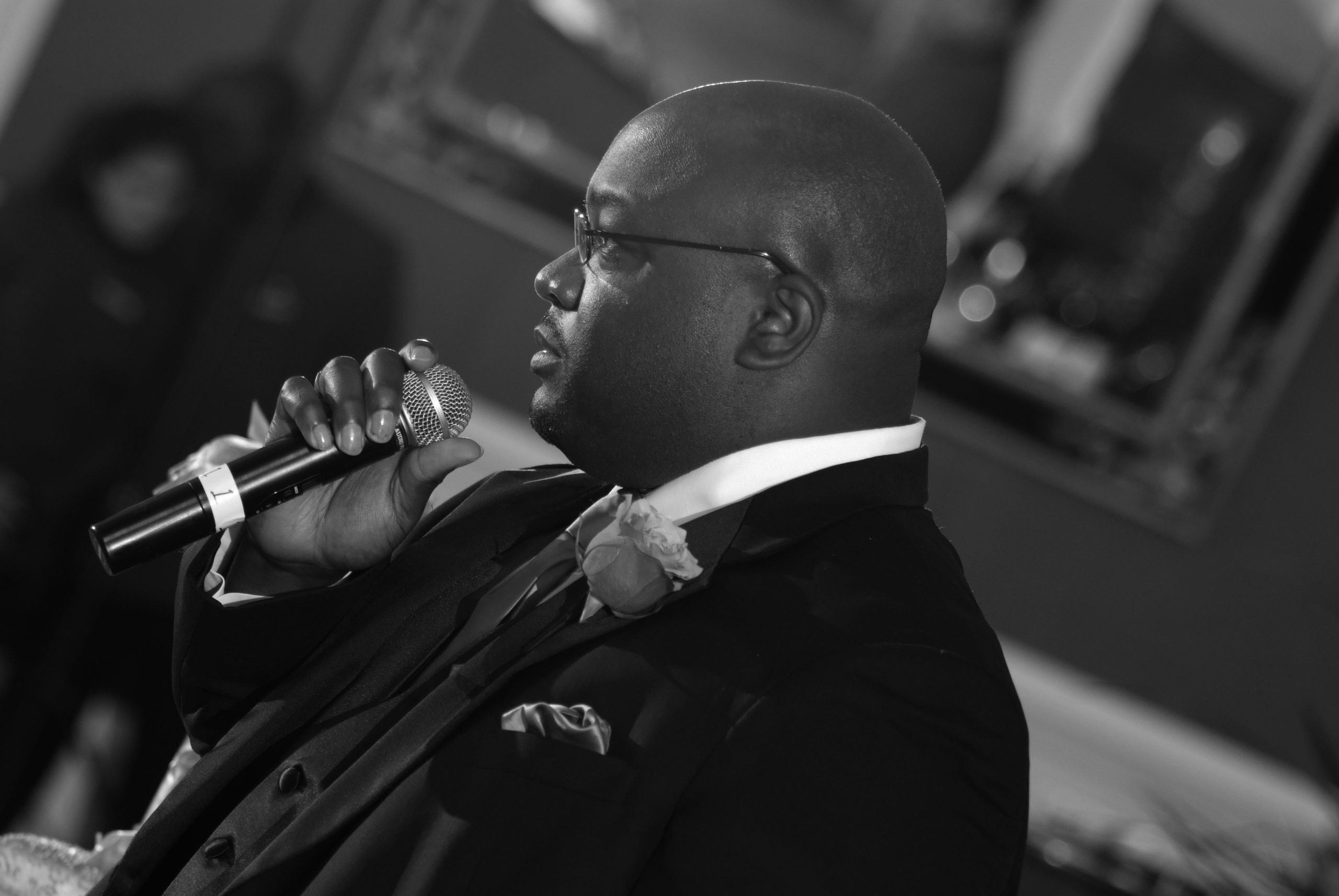
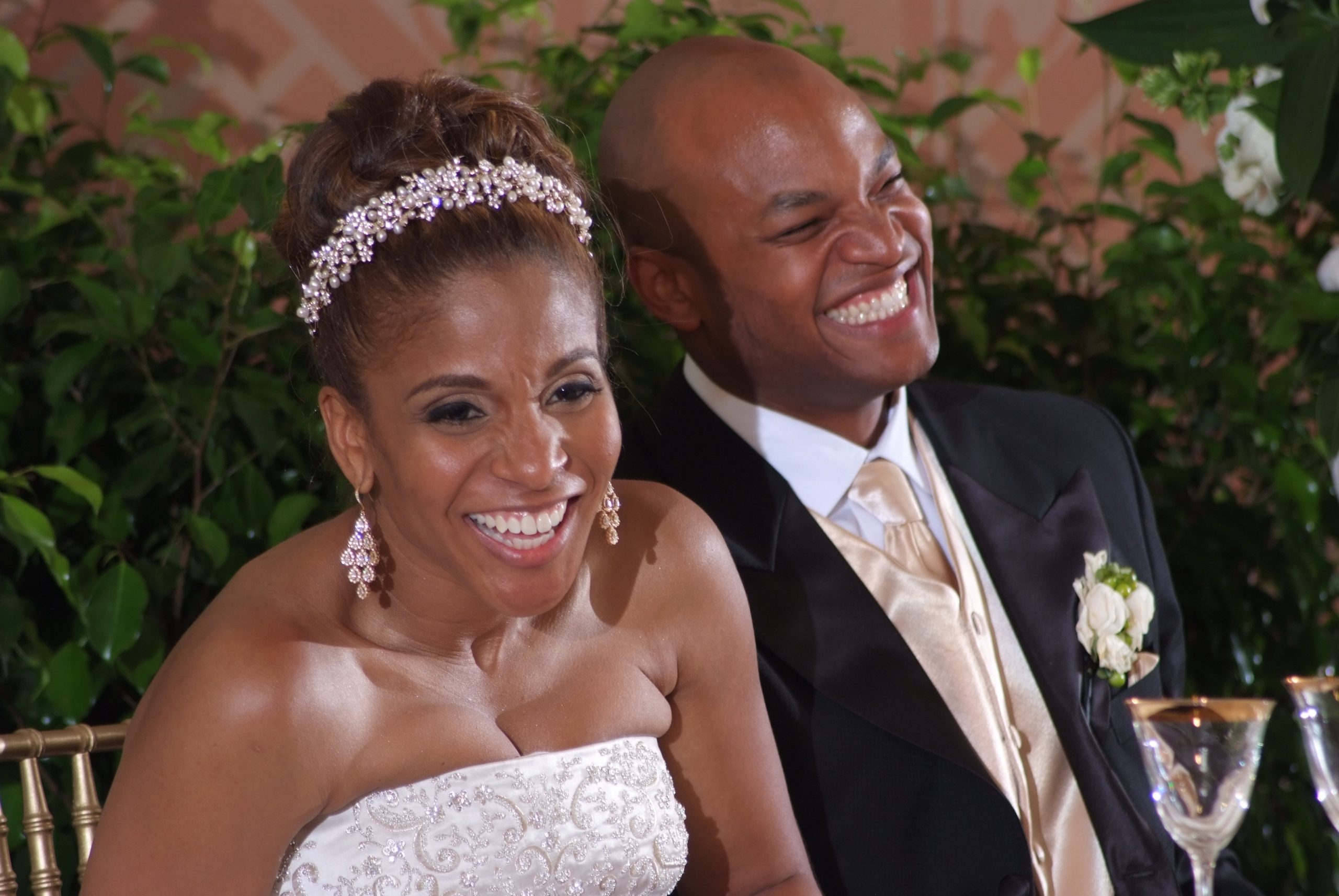
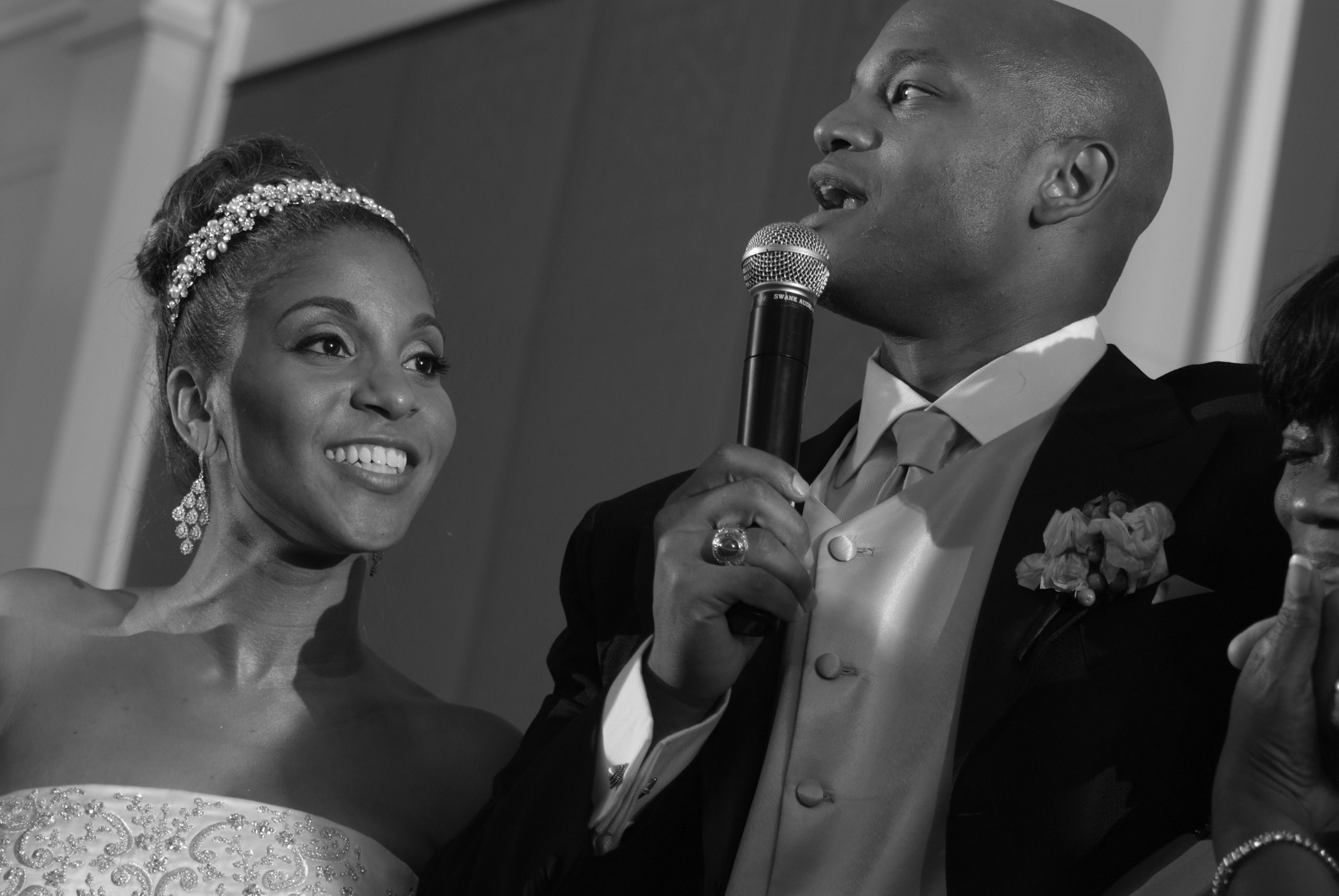
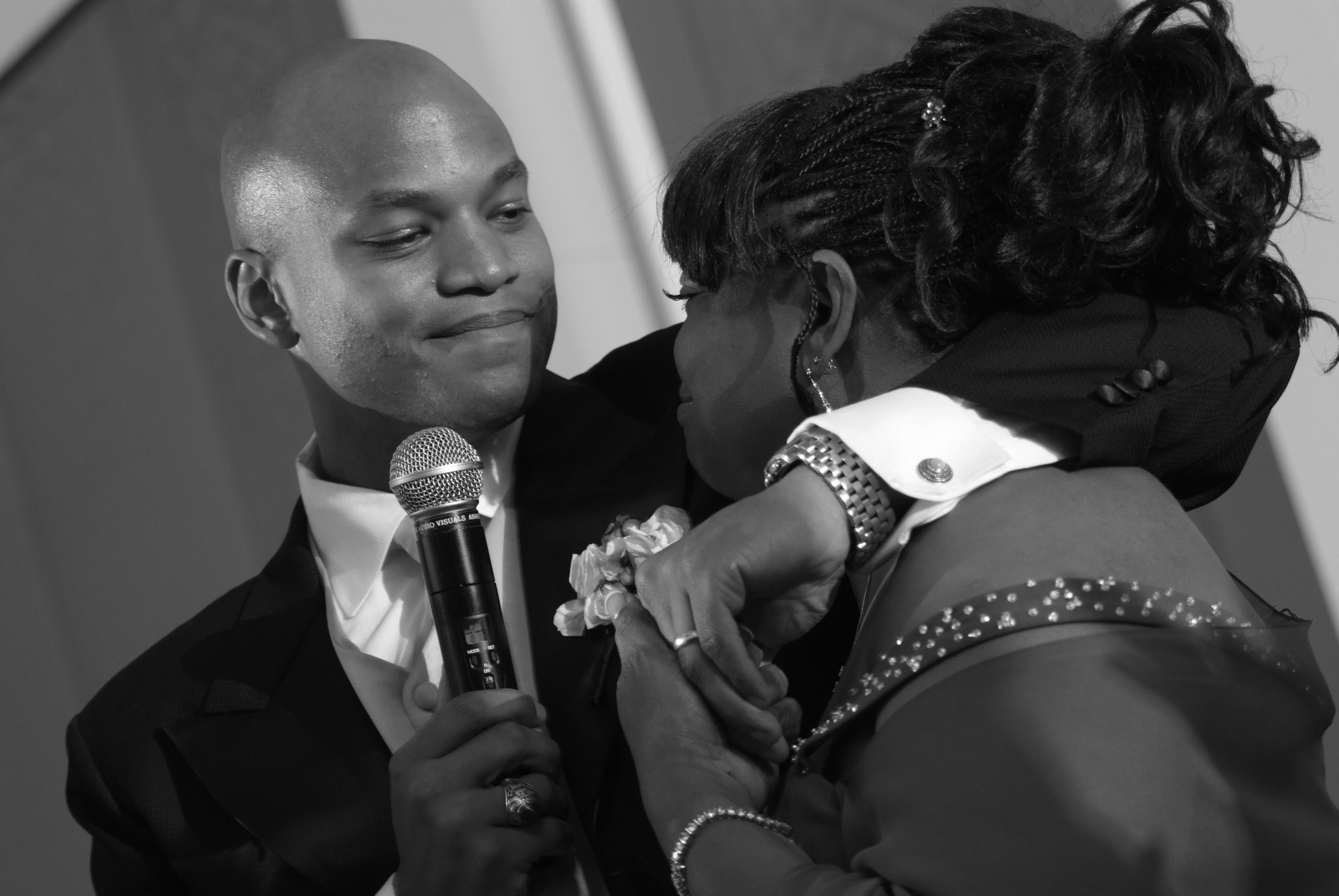
Some of my favorite reception photographs came during the speeches. There was plenty of toasting and some good-natured roasting, too. I remember Wes and Dawn laughing together, their faces filled with genuine amusement. Those are the expressions photographers hope to capture. Not the smiles people produce because someone tells them to look at the camera, but the real ones, the ones that happen when people forget they’re being photographed.
There were quieter moments as well: a first dance, an embrace, an expression that appeared for only a second before disappearing. Those moments mattered every bit as much as the grand church exit, perhaps even more. Because weddings aren’t only about spectacular photographs. They’re about human connections.
THE PEOPLE BEFORE THE HISTORY
Years passed. Carla and I eventually left Maryland in 2013, and our lives and business continued in Florida. Wes Moore’s life took him into an increasingly prominent public career and, eventually, the governor’s office.
But when I look at these photographs, I don’t begin by thinking about politics. I remember a young couple visiting our home to talk about their wedding. I remember Dawn preparing for her ceremony. I remember the enormous staircase at National City Christian Church, and I remember Wes and Dawn laughing together during their wedding reception.
Those memories existed long before either of them entered Maryland’s Government House. The photographs were already meaningful. Time simply gave them another chapter.
THE CAMERA REMEMBERS WHAT THE HEART FELT
I’ve spent much of my life photographing weddings. Over the years, I’ve come to believe that the most important part of photography isn’t necessarily the equipment we carry. It’s what we recognize, what we anticipate, what we feel, and how we respond when a moment appears before us.
Technical skill matters. Preparation matters. Experience matters. But there comes a point when those things work together so naturally that the camera feels like an extension of your own senses.
That’s what I remember about Wes and Dawn’s wedding. I remember knowing that something extraordinary was about to happen on those church steps. I remember feeling the excitement before I saw the finished photographs, and I remember the satisfaction of discovering that my cameras had captured something close to what I experienced.
Nearly twenty years later, I can look at those images and remember that beautiful July afternoon: the sunshine, the breeze, the bubbles, the laughter, and the feeling of standing behind three cameras while an unforgettable wedding celebration unfolded before me.
A photograph preserves what a moment looked like. The photographer remembers what it felt like to be there.
And sometimes, if we’re fortunate, the two come together.
— Alan
Artisan Photographics